Kandyan Dance
Kandyan Dance
A codified performing art from Sri Lanka's highlands, Kandyan dance can be discovered every evening in Kandy and reaches its peak during the Esala Perahera festival.
Kandyan dance is one of the most codified performing arts in Sri Lanka. Born in the highlands around Kandy, it combines percussion, ritualized costumes and choreographies inspired by deities, animals and Buddhist narratives. Today presented every evening in several halls in the city, it remains a strong cultural marker, particularly visible during the Esala Perahera festival.
Why attend a Kandyan dance performance
Kandyan dance offers concrete access to classical Sinhalese culture: codified gestures, complex percussion, costumes laden with symbolism. Unlike a museum, the live performance conveys the rhythmic and collective dimension of this art. A performance lasting about an hour allows you to grasp the main styles, traditional instruments and the place of the body in Buddhist liturgy. For travelers passing through Kandy, it's also a natural complement to visiting the Temple of the Tooth, whose ceremonies call upon the same musicians and dancers.
Origins and history
Kandyan dance developed in the ancient region of Kandy, in connection with religious practices and Buddhism. It draws from healing rituals, offerings to deities and royal ceremonies. Its codification was refined under the Kingdom of Kandy, the last independent Sinhalese state to resist European colonial powers (Portuguese, Dutch and then British) until the early 19th century. During this period of resistance, dance took on an identity dimension: it became a marker of cultural and religious continuity in the face of outside influences.
After the British annexation of 1815, the art was maintained in temples and villages, before experiencing a revival in the 20th century, notably through academic teaching and staging for national ceremonies.
The four styles to know
Kandyan dance comes in several styles, transmitted according to precise rules:
- Ves: the most emblematic form, recognizable by its sacred headdress and richly adorned costume. This is the style associated with major ceremonies.
- Naiyandi: a more graceful dance, performed during ceremonies and opening rituals.
- Vannam: narrative dances inspired by animals (elephant, peacock, cobra, among others), each translating a trait or symbol into movement.
- Pantheru: rhythmic dance, linked to a small traditional instrument with bells manipulated during the performance.
Costumes and symbolism
The Ves costume is the most identifiable: large white sarong draped, beaded net on the chest, metal ornaments (bracelets, chains, bells at the ankles). The Ves headdress is considered sacred. According to tradition, it is worn only after the initiation ceremony called ves mangalya, which marks the official recognition of the dancer by his lineage of teaching.
Rhythms and percussion
The music is essentially rhythmic. The geta bera, a cylindrical double-skinned drum, sets the main beat; the uddekki, an hourglass-shaped drum, adds tonal variations. Cymbals and flutes come in as complements depending on the sequences, alternating between solemn and more festive moods.
Practical information
In Kandy, several halls offer daily performances in late afternoon, lasting about an hour, bringing together the main styles of dance, percussion numbers and often a final fire-walking demonstration.
- Kandy Lake Club Cultural Show: daily performances in late afternoon, one of the most frequently visited by tourists.
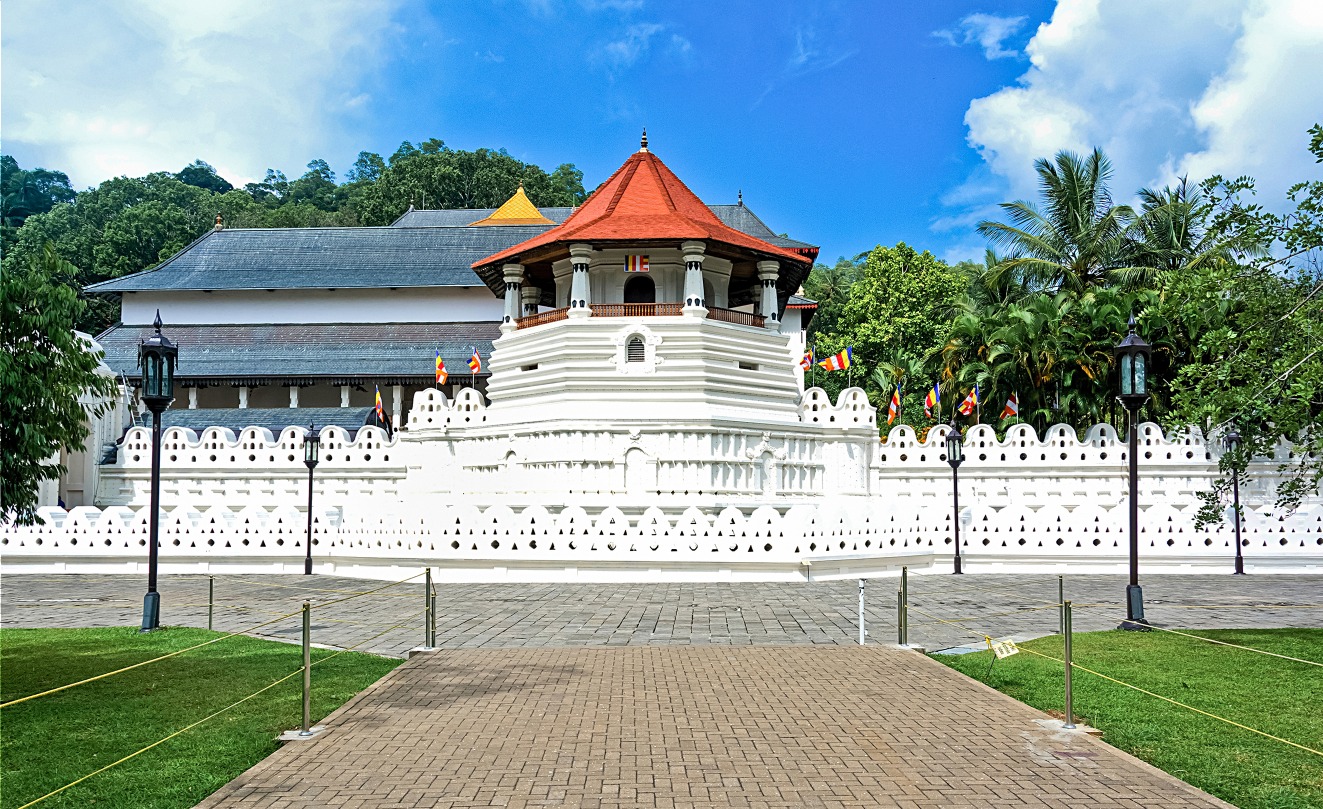
- Cultural performances around the Temple of the Tooth (Sri Dalada Maligawa): performances depending on periods, sometimes linked to religious ceremonies.
The entry fee remains moderate and is generally paid on site. Plan to arrive about twenty minutes early to secure a seat with good visibility, as front rows fill quickly.
When to go
Daily cultural performances operate year-round. To see Kandyan dance in its most complete ritual setting, the unmissable event is the Esala Perahera festival, held in Kandy in July or August according to the Buddhist lunar calendar. For about ten nights, hundreds of dancers and musicians accompany the procession of the relics of the Temple of the Tooth, alongside caparisoned elephants and fire carriers. This is the busiest period of the year in Kandy: it is recommended to book accommodation and seats several months in advance.
See nearby
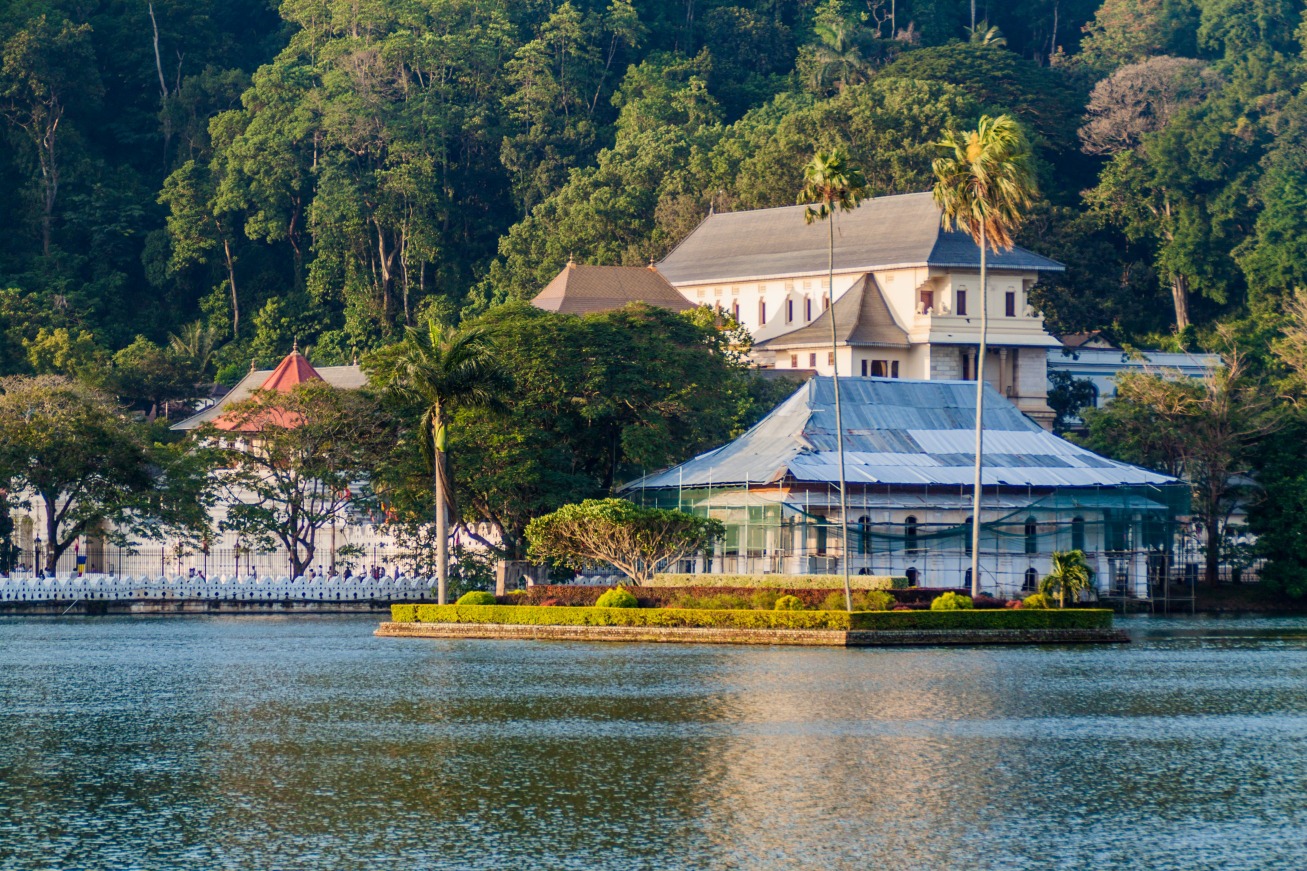
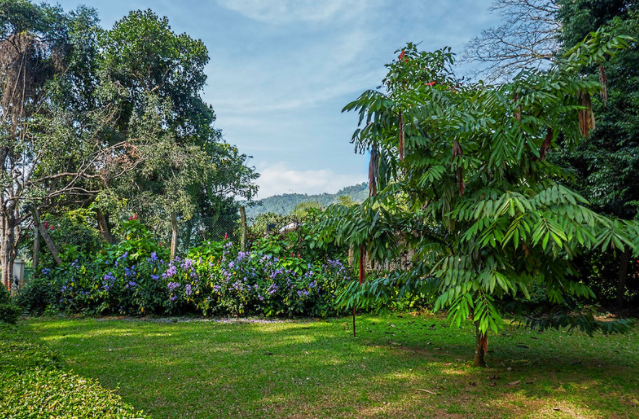
Kandyan dance is part of a rich cultural ensemble around Kandy. The Temple of the Tooth and Kandy lake are within walking distance of most performance halls. The Peradeniya Botanical Gardens, about ten kilometers away, complement a day of sightseeing. For travelers interested in religious craftsmanship and carved wood, the Embekke Devalaya temple offers a direct extension to the visual universe of dance. Further south, Adam's Peak and the monastic site of Ritigala broaden the cultural and spiritual journey.
Frequently asked questions
Häufig gestellte Fragen
Bharatanatyam is a classical dance form from southern India, centered on facial expression (abhinaya) and highly codified hand gestures. Kandyan dance, of Sinhalese origin, places greater emphasis on broad body movements, jumps, rhythmic work with percussion and the use of the Ves costume. The symbolic repertoires and ritual contexts are also distinct.
Daily tourist performances last about an hour and feature several styles of dance, percussion numbers and a fire-walking demonstration as a finale.
Photos without flash are generally tolerated in performance halls. During religious ceremonies or the Esala Perahera procession, restrictions may apply: it is advisable to ask before photographing dancers in ritual attire, particularly those wearing the Ves headdress.
Prepare your trip
Kandyan dance fits naturally into a cultural itinerary around the Cultural Triangle and highlands. To build a tailor-made itinerary including Kandy, Esala Perahera or nearby Buddhist sites, consult our suggestions for Sri Lanka travel.
In der Nähe
Interesse an diesem Besuch?
Wir können ihn in Ihre persönliche Route aufnehmen.